Be the peer you once needed
1 in 3 women describe their birth as traumatic. Many never get the chance to process what happened. As a Mendara facilitator, you sit alongside small groups of women who get it, and hold the space while they talk.
Paid fairly. Properly trained. Developed with the Birth Trauma Association.

What does a Mendara facilitator do?
Women who've had a difficult birth often have nowhere to take what happened. Mendara brings them together in small, anonymous groups that get it. As a facilitator, you help shape each group, then stay alongside them for a series of fortnightly sessions.
You'll lead 60-minute, text-based sessions in the Mendara app. Members join fortnightly under a nickname, and each session explores different themes, like flashbacks, guilt and blame or navigating healthcare.
You don't need to be a therapist. Mendara is peer support, not therapy, and it was developed with the Birth Trauma Association. You bring warmth and a trauma-informed approach. We bring the training, the tools and the people. Your job is to hold the space, not fill it.
Why facilitate with Mendara?
Paid fairly for your time
People who support others do invaluable work, and they should be paid for it. Member subscriptions fund every session, so you're paid for each group you lead.
Certified training
You'll complete trauma-informed training developed with the Birth Trauma Association.
We handle the rest
We match and invite members, schedule sessions in the app and send the reminders. You focus on the conversation.
How do I get started?
Step
01
Apply online
Tell us a little about yourself, your experience of supporting others, and why Mendara matters to you.
Step
02
Have a chat with the team
We'll arrange an informal call to get to know you, answer your questions and talk through how facilitating works.
Step
03
Complete your Mendara training
Complete your trauma-informed Mendara peer support training, led in partnership with the Birth Trauma Association.
Step
04
Lead your first session
Facilitate your first session, with the support of a supervisor.
Is facilitating with Mendara right for me?
You know what it's like.
Through your lived experience you understand how isolating a difficult birth can be.
You are a natural listener.
You can sit with someone's story without rushing to fix it.
You want flexible, meaningful work.
Sessions are online and text-based, so you can lead groups from home around your other commitments.
You want to build something better.
Help shape how women are supported after a difficult birth.
Meet Our Facilitators
Each Mendara session is held by trained facilitators who bring professional care, lived understanding, and a steady group presence.

Rachael
Chair of the Birth Trauma Association
I came to the role of BTA chair and volunteer manager due to my own experience of a twin pregnancy which was complicated by a life-changing placental abruption, emergency caesarean birth, and severe postpartum complications.
Read more
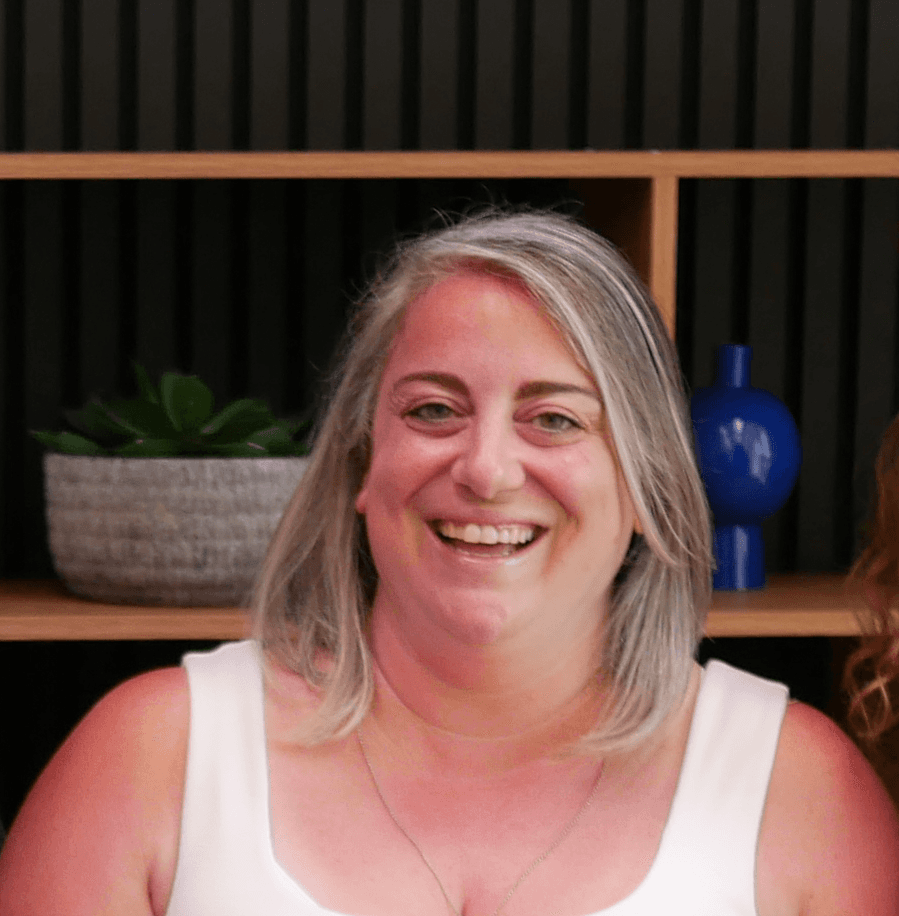
Leone
Session Facilitator
With my third pregnancy I was hospitalised at 20 weeks with sepsis, and spent time in intensive care. I first realised I had postnatal depression four months after, but it took a further year before I reached out and was, gently, told I had PTSD. I ultimately credit EMDR therapy with saving my life, as well as the Birth Trauma Association, who provided a space for me to tell my story. I want to help create a space for others to feel less alone and tell their story. There's power in taking back our stories but healing is possible.
Read more

Colleen
Session Facilitator
I experienced a difficult lead up to my first birth, including a severe PUPPP rash, multiple ‘stretch & sweeps’ which I experienced as extremely painful and violating, and fourth degree tears. I didn't realise for some time that I was experiencing birth trauma. It is important for me to be able to offer support to others in a similar situation as it's an area where gratitude and grief, delight and devastation can sit all at once, which can feel very overwhelming when navigating parenthood. A little support can go a long way.
Read more
